Source Medical School Dental Simulator for Training, Education, and Practice
Explore 30 available models of the medical school dental simulator designed for clinical training and educational use. Compare features such as adjustable phantom heads, silica gel faces, and CE-certified components to find the right unit for your dental school or hospital department.
Key considerations
Products List






Comprehensive Sourcing Guide
Medical School Dental Simulator Sourcing Guide
Sourcing a medical school dental simulator requires a disciplined approach that balances pedagogical fidelity with operational durability. These systems are not merely furniture; they are complex assemblies of mechanical, electrical, and software components designed to replicate the clinical environment of a dental practice. Buyers must recognize that the term "dental simulator" encompasses a wide spectrum of equipment, ranging from basic phantom head units to fully integrated simulation units with water supply, suction, and high-speed handpiece integration. The procurement process begins with a clear definition of the educational objectives, whether the focus is on basic cavity preparation, endodontic training, or prosthodontic workflows. Understanding these nuances is critical because the hardware configuration must align directly with the curriculum’s technical requirements.
The market for these simulators is characterized by a diverse range of manufacturers, primarily concentrated in manufacturing hubs such as Hebei and Guangdong in China. Listings often reveal significant variation in model numbering, such as UMG-II through UMG-VII, or distinct series like DA-C2 and DA-TV01, which can confuse buyers unfamiliar with specific vendor nomenclature. It is essential to treat model numbers as internal identifiers rather than universal standards. Procurement teams must look beyond the model name to the actual physical and functional specifications provided in the product data. This includes verifying the adjustability of the phantom head, the dimensions of the workbench, and the material composition of the manikin face, as these factors directly impact student ergonomics and training realism.
Product Scope and Observed Listing Signals
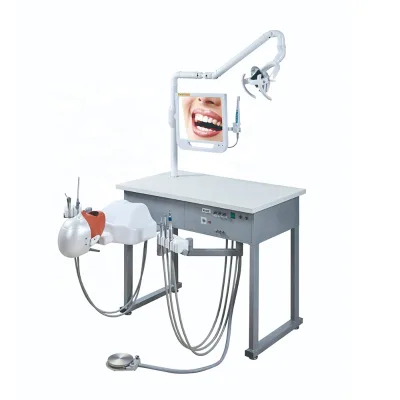
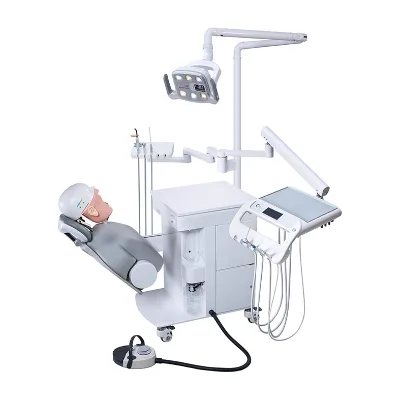
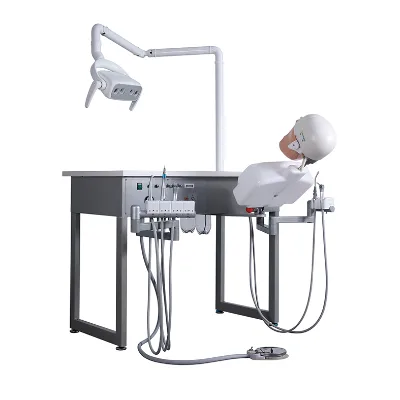
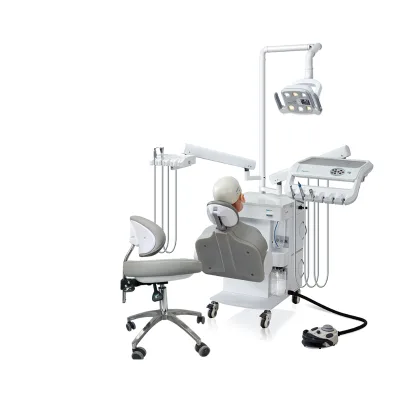
The observed product landscape indicates a strong emphasis on anatomical accuracy and modular design. Many listed units are described as "Anatomical Models" or "Dental Simulation Units" with a primary usage in dental teaching and hospital settings. A key feature frequently highlighted is the ability to adjust the phantom head, often up to 90 degrees, which allows instructors to simulate various patient positions and access angles. This mechanical flexibility is crucial for comprehensive training, as it enables students to practice procedures from multiple perspectives. Buyers should verify the range of motion and the locking mechanisms to ensure stability during intensive use, as loose joints can compromise the precision required for dental procedures.
Material composition and build quality are significant differentiators in this category. While some units may utilize standard plastics, others specify metal construction for the main frame, providing greater durability and weight stability. The face material of the manikin is often cited as silica gel, which offers a realistic tactile feedback similar to human tissue, enhancing the learning experience for cutting and shaping operations. Additionally, the inclusion of accessories such as high and low-speed handpieces, along with replaceable components, suggests a design philosophy centered on longevity and ease of maintenance. Procurement teams should assess whether these accessories are included in the base price or offered as optional add-ons, as this affects the total cost of ownership and the immediate readiness of the equipment for classroom use.
Technical Specifications to Verify
Dimensional accuracy and workspace ergonomics are paramount for student comfort and procedural efficiency. The workbench dimensions vary across listings, with some units specified at 1006080cm, while others may have different footprints such as 8362100cm. Buyers must ensure that the selected simulator fits within the designated laboratory space while allowing adequate room for student movement and instructor supervision. The height-adjustable nature of many manikins is a critical feature that accommodates users of varying statures, reducing physical strain during long training sessions. It is advisable to request detailed technical drawings or CAD files to verify clearances and integration with existing laboratory furniture before finalizing a purchase.
The electrical and mechanical systems within the simulator must be robust enough to support continuous educational use. Specifications often mention that the main part is electrical, implying the need for stable power connections and potentially specific voltage requirements depending on the region. The presence of high and low-speed handpieces indicates that the unit likely includes integrated water and air supply systems. Buyers should verify the compatibility of these handpieces with standard dental equipment and inquire about the noise levels and vibration dampening features. Furthermore, the modularity of the components, described as "replaceable," suggests that individual parts can be swapped out without replacing the entire unit, which is a significant advantage for long-term operational continuity.
Compliance and Safety Documentation
Regulatory compliance is a non-negotiable aspect of sourcing medical and educational equipment. The majority of observed listings indicate CE certification, which is a mandatory conformity marking for products sold within the European Economic Area. This certification suggests that the manufacturer claims adherence to European health, safety, and environmental protection standards. However, buyers must treat this as a starting point for verification rather than a guarantee of quality. It is essential to request the actual CE declaration of conformity and verify the notified body number if applicable. For markets outside Europe, such as the United States or Asia, equivalent certifications like ISO or local regulatory approvals may be required, and buyers should confirm which specific standards the product meets.
In addition to regulatory certifications, safety documentation related to the instrument classification should be reviewed. Some listings mention an "Instrument classification: Class II," which typically refers to electrical safety standards regarding protection against electric shock. This classification implies that the device has double insulation or reinforced insulation, providing an additional layer of safety for users. Buyers should also inquire about the warranty terms, with many suppliers offering a one-year warranty on the equipment. Understanding the scope of this warranty, including whether it covers labor, shipping, and specific components like the handpieces or silica gel faces, is crucial for managing risk and planning for potential repair costs.
Cost Drivers and Commercial Terms
The pricing for dental simulators varies significantly based on the level of integration and the included accessories. Observed price ranges span from approximately $167 to $3,900, reflecting the diversity from basic phantom heads to complete simulation units. The lower end of the spectrum likely represents simpler models with manual adjustments and minimal electrical integration, while the higher end corresponds to fully automated units with advanced features such as digital feedback systems or integrated suction and water management. Buyers should carefully map the price to the feature set, ensuring that they are not paying for unnecessary complexity or, conversely, missing out on critical training tools. The minimum order quantity (MOQ) is typically listed as one unit, which offers flexibility for small-scale procurement but may limit bulk discount opportunities.
Packaging and logistics are additional cost factors that should be considered during the budgeting phase. Listings indicate various packing methods, including wooden boxes and specific dimensions like 250*600mm, which impact shipping costs and handling requirements. Wooden box packaging is often used for heavier, more fragile equipment to prevent damage during transit, but it adds weight and volume to the shipment. Buyers should clarify whether the quoted price includes international shipping, insurance, and customs duties, as these can significantly increase the final landed cost. Additionally, the origin of the product, whether from Hebei or Guangdong, may influence shipping routes and transit times, so it is advisable to coordinate with freight forwarders early in the procurement process to estimate delivery schedules accurately.
Supplier Qualification and Quality Control
Evaluating supplier credibility is essential to mitigate the risks associated with international procurement. Buyers should verify the supplier’s business license and manufacturing capabilities, particularly if the supplier claims to be a direct manufacturer rather than a trading company. The presence of specific model numbers and detailed technical descriptions can be indicators of a specialized manufacturer, but independent verification is necessary. Requesting references from other educational institutions that have purchased the same models can provide valuable insights into the supplier’s reliability and after-sales support. It is also important to assess the supplier’s responsiveness to technical inquiries, as this often reflects their overall customer service quality.
Quality control processes should be clearly defined before placing an order. Buyers should inquire about the testing procedures conducted on the simulators before shipment, including functional tests of the electrical components, mechanical adjustments, and the integrity of the silica gel face. If possible, arranging for a third-party inspection or requesting video evidence of the pre-shipment testing can provide additional assurance. The supplier’s ability to provide spare parts and technical support is also a critical factor, as dental simulators require regular maintenance and occasional part replacements. Establishing a clear communication channel for technical support and understanding the lead times for spare parts can prevent operational disruptions in the training facility.
Long-Term Procurement Checks
Sustainability and lifecycle management are key considerations for long-term procurement success. Dental simulators are subject to wear and tear, particularly the silica gel faces and handpieces, which are consumable items. Buyers should establish a maintenance schedule and budget for regular replacements to ensure consistent training quality. The availability of replacement parts over the lifespan of the equipment is crucial, and buyers should confirm with the supplier that the model will remain in production or that compatible alternatives will be available. This foresight helps avoid obsolescence issues where a simulator becomes unusable due to the unavailability of specific components.
Data security and software updates, if applicable, should also be considered for more advanced simulation units. While many basic models are purely mechanical, some may include digital interfaces or software for tracking student performance. Buyers should verify the data storage capabilities and ensure that any software used is compatible with the institution’s IT infrastructure. Regular updates to the software or firmware may be necessary to maintain functionality and security. By planning for these long-term needs, educational institutions can maximize the return on their investment in dental simulation technology and ensure that their training programs remain current and effective.
FAQs
What is the standard packaging for medical school dental simulators
The standard packaging for these simulators is a wooden box. This robust packaging method is designed to protect the metal components and electrical parts during international shipping. Buyers should verify the specific dimensions with the supplier to ensure proper handling and storage upon arrival.
What certifications are available for dental simulation units
Medical school dental simulators typically carry CE certification, and some models also include ISO certification. These standards indicate compliance with international safety and quality requirements. Buyers should request current certificates to verify that the specific model meets their institutional regulatory needs.
Can dental simulators be customized for specific training needs
Yes, customization is available for these dental simulation units. Suppliers can often adjust features such as the phantom head angle, which can be set to 90 degrees, or modify specific components. Buyers should discuss their specific curriculum requirements with the manufacturer to ensure the unit fits their training environment.
What is the minimum order quantity for dental simulators
The minimum order quantity is typically one set or one unit. This low MOQ allows dental schools and hospitals to purchase individual units for testing or small-scale deployment. Buyers can often negotiate bulk pricing if they are purchasing multiple units for a larger department or campus.
What materials are used in the construction of dental simulators
The main structure of the simulator is made of metal, providing durability and stability for daily use. The face component is often made of silica gel to simulate realistic patient interaction. These materials are chosen to withstand the rigors of repeated dental procedures and student training sessions.
What is the warranty period for dental simulation equipment
The standard warranty period for these dental simulators is one year. This coverage typically includes repairs for defects in materials or workmanship. Buyers should review the warranty terms to understand what specific components are covered and what maintenance is required to keep the warranty valid.
What accessories are included with dental training simulators
Standard accessories often include high and low speed handpieces, which are essential for various dental procedures. Some models also feature a workbench and replaceable components to extend the unit's lifespan. Buyers should confirm the exact list of included accessories to ensure they meet their clinical training requirements.